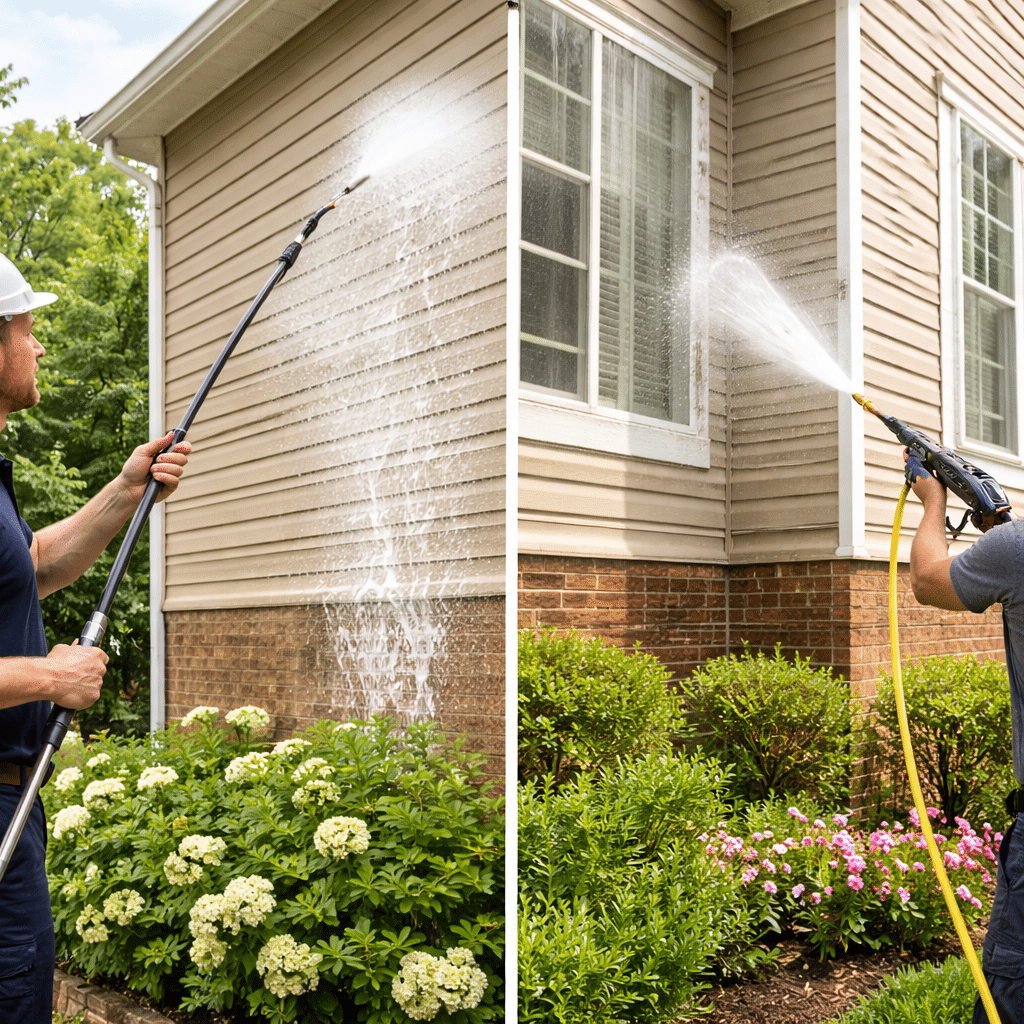
House washing in Virginia is best done using soft washing for siding, roofs, and painted surfaces, while power washing is only safe for hard surfaces like concrete. Most homes need exterior cleaning once every 12 months due to humidity, pollen, and algae growth. Average house washing costs range from $250 to $550, depending on home size, surface type, and buildup level.
If you want safe, full exterior cleaning for your home in Virginia, soft washing is the correct method for most houses, while power washing should only be used on specific hard surfaces. Choosing the wrong method can cause siding damage, paint failure, or moisture intrusion especially in Virginia’s climate.
The biggest decision homeowners face is whether to use soft washing or power washing, and the wrong choice can lead to costly repairs. This guide explains exactly how house washing works, what method is safest, how much it costs in Virginia, how often it’s needed, and what risks come from skipping it. Everything below is based on real service data, not generic advice.
What Is House Washing and What Does It Include?
House washing is a form of residential exterior cleaning that focuses on removing organic growth and surface contamination without harming the home’s materials. It’s not just about appearance it’s about surface protection.
A proper house washing service in Virginia usually includes cleaning:
- Vinyl, Hardie board, and painted siding
- Fascia, soffits, and exterior trim
- Gutters (outside surfaces only)
- Entryways and exterior walls
This service does not mean blasting water at your home. Most modern residential house washing relies on controlled water pressure combined with cleaning solutions that break down organic growth at the root level.
Soft Washing vs Power Washing: The Real Difference
Many homeowners assume both methods are interchangeable. They are not, especially for homes in Virginia.
Soft washing uses low pressure (40–60 PSI) combined with biodegradable cleaners to safely remove algae, mold, and mildew. Power washing uses high pressure (2,500–3,500 PSI) and relies mainly on force.
Comparison Table: Soft Wash vs Power Wash
| Feature | Soft Washing | Power Washing |
|---|---|---|
| Pressure Level | 40–60 PSI | 2,500–3,500 PSI |
| Safe for Siding | Yes | No |
| Kills Algae at Roots | Yes | No |
| Paint Damage Risk | Very Low | High |
| Water Usage | Lower | Higher |
| Best For | Homes | Concrete & stone |
For house washing, soft washing is the correct and safer method in over 90% of residential cases.
When Power Washing Is Actually Appropriate
Power washing still has a place, but not on your home’s siding.
It is best used for:
- Driveways and sidewalks
- Concrete patios
- Brick walkways
- Stone retaining walls
Using power washing on siding can force water behind panels, crack paint, and loosen caulking problems that often appear months later, not immediately.
House Washing Costs in Virginia (Exact Figures)
Homeowners want real numbers, not ranges with no context. Below is what most Virginia homeowners actually pay.
Average House Washing Prices
| Home Size | Average Cost |
|---|---|
| 1,200–1,800 sq ft | $250–$325 |
| 1,800–2,500 sq ft | $325–$425 |
| 2,500–3,500 sq ft | $425–$550 |
| Heavy algae buildup | +$75–$150 |
Prices vary based on height, material, and contamination level not just square footage.
Cost of Neglecting House Washing
Skipping house washing doesn’t save money it delays expenses that come back larger.
Repair Risks Table
| Neglect Issue | Average Repair Cost |
|---|---|
| Paint failure | $3,000–$6,000 |
| Siding replacement | $8,000–$15,000 |
| Wood rot repairs | $1,500–$4,000 |
| Mold remediation | $2,000–$5,000 |
Annual house washing at $300–$400 is far cheaper than one avoidable repair.
How Often Should You Wash Your House in Virginia?
Most homes in Virginia need house washing once every 12 months to stay clean and protected. This yearly schedule works well for properties with good sun exposure and minimal tree cover, where moisture dries faster and algae growth is slower. However, homes that sit in shaded areas or near wooded lots usually need washing closer to every 9 months because damp siding allows mold and algae to spread more quickly. Properties located near water, dense trees, or consistently shaded areas often require house washing every 6 months, as moisture stays trapped on exterior surfaces for longer periods.
Homes in humid coastal cities like Newport News, Hampton, and Norfolk typically experience faster algae and mildew growth than inland areas.
Virginia Weather Factors That Affect House Washing
Virginia’s climate plays a major role in how quickly a home’s exterior becomes dirty. Humidity levels often remain above 70% for much of the year, which creates ideal conditions for algae, mold, and mildew to thrive on siding. During spring, heavy pollen coats exterior surfaces, sticking to moisture and forming a layer that traps dirt and organic growth. Unlike colder northern states, Virginia’s winters are generally mild, which allows algae and mold to survive year-round instead of dying off naturally.
Frequent rainfall further feeds organic buildup by keeping siding damp for extended periods, especially on north-facing walls. This is why house washing in Virginia is a preventive maintenance service, not just a visual upgrade.
How Professional House Washing Works
Professional house washing follows a controlled process designed to clean surfaces safely without causing damage. The service begins with a full exterior inspection to identify siding material, contamination level, and any areas that need special care. Next, the home is lightly pre-rinsed to remove loose dirt and debris so cleaning solutions can work more effectively. A soft wash solution is then applied evenly to the siding, allowing it to dwell for about 10 to 15 minutes, which gives the solution time to break down algae, mold, and mildew at the root level.
After the dwell period, the home is rinsed using low pressure that is strong enough to wash away contaminants but gentle enough to protect siding, paint, and trim. A final detail check ensures no streaks, residue, or missed areas remain. This method cleans deeper than surface rinsing and prevents fast regrowth, which is why professional house washing lasts significantly longer than DIY attempts.
DIY vs Professional House Washing
DIY house washing often leads to accidental damage because most homeowners don’t have the correct equipment or training. Renting a pressure washer and using it on siding is one of the most common mistakes, as high pressure can crack vinyl panels, force water behind siding, and strip paint. Improper chemical use is another issue, especially when bleach is applied incorrectly, which can damage plants, discolor siding, and still fail to remove algae roots. Uneven spraying often leaves visible streaks, and trapped moisture behind panels can lead to mold growth inside wall cavities.
Why Homeowners Trust Envirowash Inc
Professional House Washingby Envirowash Inc , house washing is performed using soft washing methods designed to clean without damage. Based in Newport News, VA, the company serves homeowners across Hampton Roads with trained technicians, environmentally responsible cleaners, and proven results. With 25+ years of combined experience, hundreds of Google reviews, and a satisfaction guarantee, Envirowash focuses on long-term surface care, not quick spray-and-go jobs. Homeowners trust the team for reliable scheduling, clear pricing, and noticeable improvements that restore curb appeal without risking siding or landscaping.
House Washing in Virginia
Dirt, algae, and green buildup can make siding look old fast. Envirowash Inc provides safe soft washing house cleaning to restore your home’s exterior without surface damage.
Conclusion
House washing is one of the most cost-effective ways to protect and maintain your home in Virginia. Soft washing is the safest and most effective method for siding, while power washing should be limited to hard surfaces only. With average costs between $250 and $550 and recommended annual service, regular cleaning prevents expensive repairs caused by algae, mold, and moisture damage. Virginia’s climate makes exterior cleaning a necessity, not a luxury. Choosing the right method and the right company ensures your home stays clean, protected, and visually appealing year-round.
House Washing FAQs
How long does house washing take?
Most homes take 1.5 to 3 hours, depending on size and buildup.
Is soft washing safe for vinyl siding?
Yes, it is specifically designed for vinyl and painted surfaces.
Will house washing kill mold completely?
Yes, soft washing removes mold at the root level.
Can house washing damage plants?
No, when done correctly with proper rinsing.
Is house washing worth it before selling a home?
Yes, it can increase perceived value and buyer interest.
Do I need to be home during the service?
No, as long as water access is available.
What time of year is best for house washing?
Spring and fall are ideal, but service is effective year-round.
Does house washing remove pollen stains?
Yes, pollen buildup is fully removed with soft washing.
How soon will algae come back?
Typically 9–12 months, depending on shade and humidity.
Is power washing ever safe for siding?
No, it is not recommended for residential siding.